
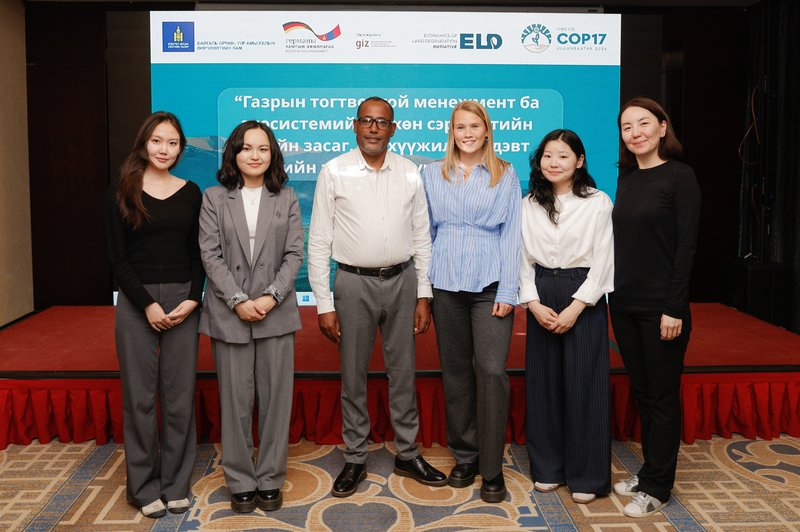
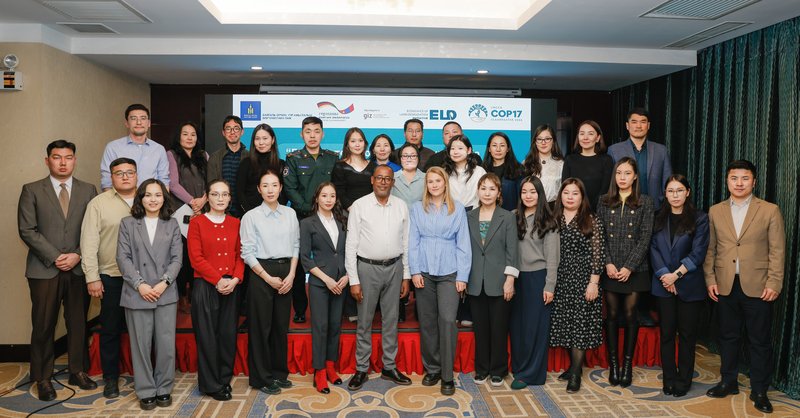
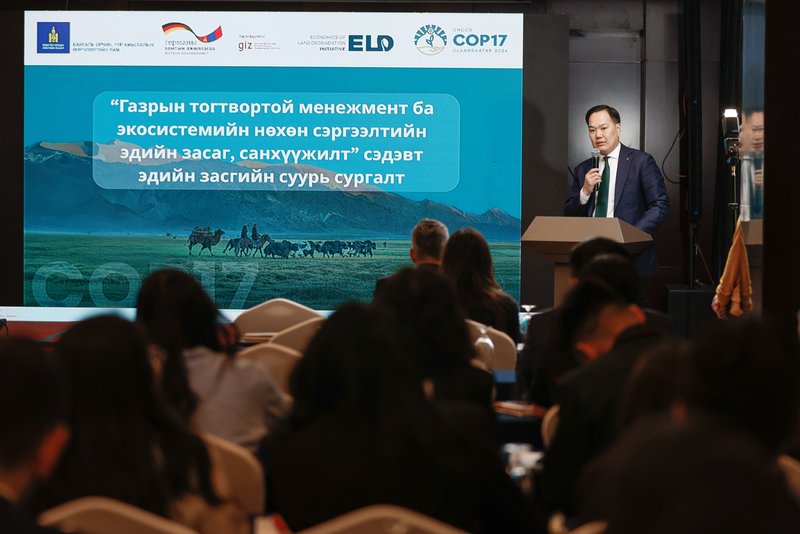
In preparation for Mongolia hosting the 17th Session of the Conference of the Parties to the United Nations Convention to Combat Desertification (UNCCD COP17) in 2026, a two-day foundational training on the Economics and Financing of Sustainable Land Management and Ecosystem Restoration was conducted in Ulaanbaatar last week.
The training was jointly organized by the Mongolian Ministry of Environment and Climate Change, the Deutsche Gesellschaft für Internationale Zusammenarbeit GmbH, and the Economics of Land Degradation Initiative.
Strengthening Understanding of Interconnected Environmental Challenges
Land degradation, biodiversity loss, and climate change constitute interlinked global challenges with significant environmental, economic, and social implications. The training aimed to strengthen participants’ understanding of these interdependencies and to highlight the economic consequences of continued land degradation, as well as the potential benefits of sustainable land management (SLM) and ecosystem restoration.
Participants were introduced to approaches for:
- Assessing the economic costs of land degradation and ecosystem decline
- Identifying co-benefits of restoration across environmental and socio-economic dimensions
- Supporting evidence-based policy and investment decisions
- Enhancing cross-sectoral planning across land, climate, and biodiversity agendas
Integrating Economics into Policy and Financing Frameworks
A particular focus of the training was placed on the integration of economic tools and financing approaches into national planning processes. Participants discussed how sustainable land management and ecosystem restoration can be better reflected in policy frameworks and financial strategies, and how public and private financing mechanisms can be mobilised to support implementation at scale.
The training combined conceptual inputs with applied discussions and case-based learning, enabling participants to reflect on the relevance of economic approaches within the Mongolian context and in view of upcoming international commitments.
The ELD Initiative extends its sincere appreciation to all participants for their constructive engagement and contributions throughout the training.
Special thanks are extended to our ELD Working Group member Mesfin Tilahun Gelaye for the development and delivery of the training materials, as well as to all implementing partners for their effective coordination and support on the ground.
As Mongolia advances its preparations for UNCCD COP17, strengthening capacities in the economics and financing of land restoration remains a key element in supporting informed decision-making and effective implementation.